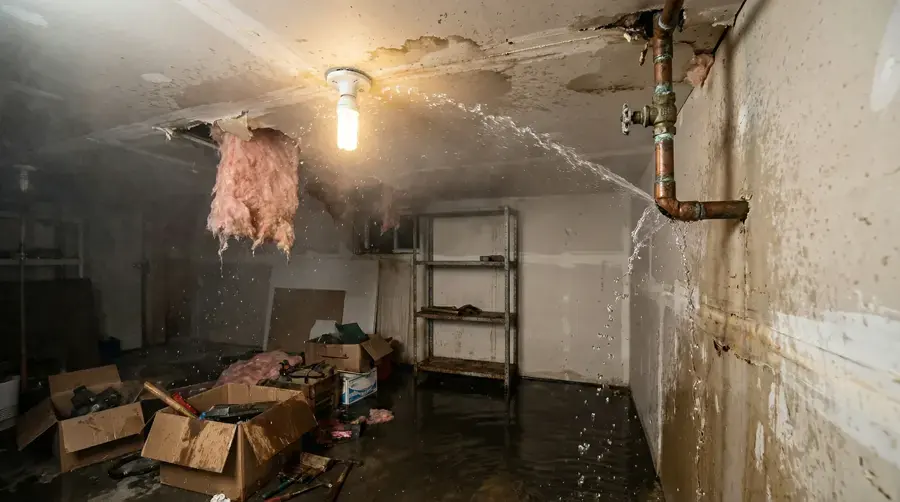
A January 2026 ice storm hit Concord, and the city's state of emergency ended on January 27, 2026 at 5 p.m. When the ice melted, many households found out whether a pipe had frozen, and whether it had split.
Key takeaways
- The City of Concord says many no water calls during hard freezes turn out to be frozen home pipes, not water main breaks.
- Winter nights in Concord often fall into the teens, which is cold enough to freeze exposed pipes.
- A frozen pipe often does not leak until it thaws, so the water shows up when the weather warms.
- Shut off the main valve at the first sign of a split pipe and photograph the damage before cleaning up.
- Water inside walls and ceilings must be dried to readings, not covered or painted over.
The January 2026 ice storm in Concord
An ice storm hit Concord in January 2026. The city declared a state of emergency, and it ended on January 27, 2026 at 5 p.m.
Concord has a humid subtropical climate, with about 43.8 inches of rain a year and winter nights that often fall into the teens. Cold snaps like this are occasional, but they test plumbing that is not used to freezing.
Frozen home pipes, not main breaks
When the water stops flowing at a faucet during a freeze, it is natural to suspect the city. The City of Concord says many no water calls in hard freezes are frozen home pipes, not water main breaks.
That is useful to know. If neighbors still have water and one house does not, the problem is almost certainly inside that house.
- Neighbors have water and you do not: check your own pipes first.
- Only one faucet or one bathroom is dry: the frozen section is probably nearby.
- A trickle that stops: ice is likely partly blocking a pipe.
Why a frozen pipe splits
Water expands as it turns to ice. The pressure builds inside the pipe between the ice and the closed faucet, and the pipe wall gives way at its weakest point.
The split usually sits where the ice formed, but the leak does not start there. Ice acts as a plug, and water pours out only when it melts.
Where pipes freeze first
Pipes in unheated or exposed spaces are the most likely to freeze.
- Pipes against exterior walls or in poorly insulated attics.
- Plumbing in crawl spaces, garages and outbuildings.
- Outdoor spigots and the pipes behind them.
Why the water shows up at the thaw
A pipe can be split for days and stay quiet. When temperatures rise and the ice melts, full water pressure runs through the crack, and a ceiling or wall can fill quickly.
What a thaw looks like inside a house
When the ice melts, water can run down inside a wall for hours before anyone sees a stain. A sound like running water with every tap closed is a strong warning.
Check the ceilings under bathrooms and the walls near exterior doors, and look in the attic and crawl space with a flashlight if it is safe to do so.
- Sound of running water with all fixtures off.
- Damp or darkened patches on ceilings and walls.
- A sudden drop in water pressure or a spinning water meter.
What to do the moment you see water
Speed matters because a split pipe under pressure keeps running. A few steps limit the damage.
- Close the main water valve at once, and open a faucet to relieve pressure.
- Turn off power to any wet area, and stay out of rooms where water is near outlets.
- Move furniture, rugs and valuables out of the water.
- Photograph the pipe, the water and the damage before cleaning.
- Call a plumber for the repair and a restoration team for the water.
How the water is removed and the cavity dried
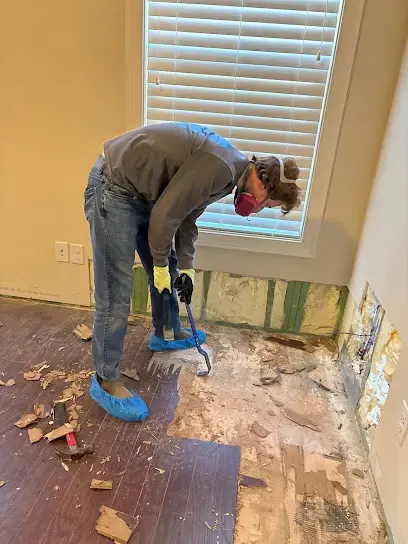
A burst pipe cleanup starts with removal of standing water, then moves to the walls, floors and ceilings where it went.
A split pipe soaks wall cavities fast. The team uses moisture meters and a thermal camera to find where the water traveled, because the wall with the visible stain is rarely the only wet one.
- Extraction: standing water is pumped or vacuumed up.
- Selective removal: wet drywall, insulation and baseboards are cut out.
- Drying: air movers and dehumidifiers run until readings reach the goal.
- Monitoring: readings are logged at each visit.
What the insurance adjuster will want to see
A burst pipe claim goes more smoothly with a clear record. The adjuster is looking for the source, the date and the scope of the damage.
Most of this can be collected while the cleanup is underway.
- Photographs of the split pipe before it is repaired.
- The plumber's invoice and a note on what was replaced.
- Moisture readings and the drying log from the restoration team.
- A list of damaged contents with photographs.
- The date the freeze occurred and the date water was found.
Drying the structure, not just the floor
Pipe water travels down inside the wall. The floor may look fine while the cavity above stays wet.
Structural drying is designed for that situation. It dries framing, subfloors and wall cavities to a measured goal, and the readings decide when the job is done.
In a house with insulation, a wet wall can hold water for a long time. A damp cavity can also let mold start, so the cavity is dried before the wall is closed.
Rentals and multi unit buildings
About 38.5% of occupied Concord homes are rented, and about 17.6% of units are in buildings of 5 or more units. A frozen pipe in one unit can drip into the unit below.
Tenants should tell the landlord right away and photograph the damage. Owners should check neighboring units for stains and soft ceilings.
- Report a frozen or leaking pipe to the property manager in writing.
- Check the ceiling in the unit below for sagging or stains.
- Keep a record of every conversation about repairs.
Preventing the next freeze loss
Most freezes can be handled with a few small habits. The city's advice about frozen home pipes points to the same idea: protect pipes before the cold arrives.
- Insulate exposed pipes in attics, garages and crawl spaces.
- Let faucets drip on the coldest nights.
- Open cabinet doors under sinks on exterior walls.
- Disconnect and drain outdoor hoses before winter.
- Know where the main shutoff is and check that it turns.
Where to go next
The Concord hub lists the other water damage services in town. For general information about this kind of loss, the burst pipe cleanup page explains the process in more detail.