Water Extraction in Huntersville, NC
Standing water keeps soaking into carpet pad, drywall and subfloor until it leaves the building. The extraction crew pulls it out first, then the drying team takes over.
(888) 578-4720Standing water? Get the extraction crew moving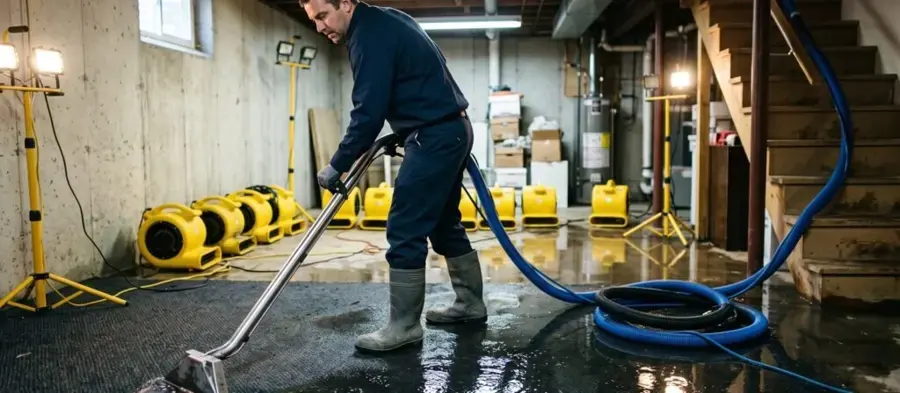
What to do the moment you find standing water
- Stop the source
Close the main shut-off or the fixture valve so no new water enters the room.
- Mind the outlets
Stay off wet carpet near plugged-in cords and kill power to wet circuits if the panel is dry.
- Photograph first
Take wide photos and close-ups of the water line before anything is moved.
- Call for extraction
Call (888) 578-4720 so the extraction crew can start pulling water out.
How standing water is handled in Huntersville
Moisture mapping first
The tech who does the walkthrough maps wet materials with pinless meters and thermal imaging before any equipment goes down.
Extraction before drying
The extraction crew pulls standing water out of the building first, because every gallon left behind adds days of drying.
Equipment sized to the room
Air movers and LGR dehumidifiers go in at the evaporation load of each room, set by the IICRC S500 class of the loss.
Readings decide the finish
The drying team records readings daily and pulls equipment only when wet materials sit within 2 to 4 points of a dry reference.
What does water extraction and removal cost in Huntersville, NC?
In Huntersville, NC, water extraction typically runs $300 to $2,500 on its own, and most jobs bundle it with drying for a total of $1,200 to $6,000, depending on the water category, the square footage and how long the water sat.
Single room, Category 1 supply water, carpet extracted in place
$300 to $900More square footage, pad removal, portable units on two levels
$900 to $2,500Equipment for several days, daily readings and documentation
$1,200 to $6,000+Every loss is priced on its own scope. Run the numbers in the water damage cost calculator for a planning range.
The water extraction and removal process, start to dry
- 1
Walkthrough and moisture map
The tech maps every wet material with meters and thermal imaging and sets the category of water.
- 2
Extraction
Truck-mounted or portable units pull standing water and wring out carpet with weighted tools.
- 3
Drying setup
Air movers and LGR dehumidifiers go in at the evaporation load of each room.
- 4
Daily readings to dry
The drying team logs readings daily and removes equipment once materials hit the drying goal.
Extraction is the step that decides how long everything else takes. Air movers and dehumidifiers remove water as vapor, a little at a time, so every gallon that stays in a carpet pad or on a slab adds days to the dry-out. In Huntersville homes the water usually comes from a supply line, a water heater in the garage or a storm that pushed runoff toward the foundation, and the first job is the same each time: get the liquid out.
Why extraction comes before drying
Liquid water is many times faster to remove by suction than by evaporation. The extraction crew works the wettest areas first and keeps going until the wand stops pulling water:
- Truck-mounted units send the water out of the building instead of into the next room
- Portable extractors reach upstairs rooms, condos and crawl space entries
- Weighted extraction tools press water out of carpet and pad that a wand alone leaves behind
- Submersible pumps handle deep water in lower levels and sump pits
What happens to carpet, pad and hardwood
Clean water from a supply line is Category 1, and carpet touched by it can often be extracted and dried in place. Pad holds water like a sponge and is usually pulled and replaced. Hardwood gets surface extraction plus drying mats that pull moisture up through the boards. Water from a creek, a storm or a sewer is Category 3, and porous materials it touched are removed, not dried. The structural drying phase picks up from there.
Water still on the floor? Shut off the source if it is safe, keep people and pets off wet carpet near outlets, then call (888) 578-4720 for 24/7 dispatch.
Where the water hides after extraction
Water runs downhill and wicks upward. Under a two-story Huntersville home it can drop through subfloor into the crawl space, or climb a few inches into drywall and baseboard. The tech who does the walkthrough uses pinless meters and thermal imaging to map those hidden areas before the drying plan is set, so nothing is missed behind cabinets or under tile.
Ready.gov has plain advice on staying safe around floodwater at ready.gov/floods, and the EPA explains how to find hidden household leaks through EPA WaterSense.
Water Extraction and Removal across Huntersville, NC
The water damage restoration experts cover all of Huntersville in ZIP codes 28078 and 28070, including Birkdale Village, Northstone, Skybrook, Vermillion, Wynfield, Rosedale, Monteith Park and the Gilead Road corridor, with Cornelius, Davidson and the Mountain Island Lake shore as nearby areas.
Related water damage services in Huntersville
Water Extraction and Removal questions, answered
How much water can a wet-vac really remove?
A shop vac handles a small puddle but leaves most of the water in carpet pad and seams. Truck-mounted extraction and weighted tools pull far more water per pass, which shortens the drying time and lowers the chance the pad has to be thrown out.
Can wet carpet be saved?
Often, when the water is clean and extraction starts quickly. The carpet itself is usually extracted and dried in place, while the pad underneath is commonly replaced. Carpet touched by creek, storm or sewer water is Category 3 and is removed for safety.
How long does extraction take?
A single room usually takes a short visit, while a flooded lower level can take a good part of a day. The drying that follows typically runs three to five days for a contained loss, longer for hardwood or plaster.
Do I need to move furniture first?
Move small items and anything valuable off the wet floor if it is safe. The crew lifts heavier furniture onto blocks or tabs so legs do not stain the carpet or wick water up.
Is extraction covered by homeowners insurance?
Sudden and accidental water, such as a burst supply line, is often covered after the deductible, while rising surface water usually falls under flood coverage. Coverage depends on your policy, so it is worth checking with your own insurer.
What if the water came from outside?
Water that ran in from a yard, a creek or a storm is treated as Category 3 because it carries soil and bacteria. The crew extracts it, removes soaked porous materials and applies an EPA-registered antimicrobial before drying.
Water Extraction and Removal in Huntersville? Call now.
Standing water keeps wicking into drywall, subfloor and crawl space framing until it is pulled out. The Huntersville restoration crew extracts it, dries the structure to the IICRC S500 standard and records every reading for the claim.
(888) 578-4720Get a north Mecklenburg drying crew movingHuntersville Water Damage Restoration
Huntersville, NC · ZIP 28078 and 28070
Dispatch open every hour, every day of the year
Find us on Google