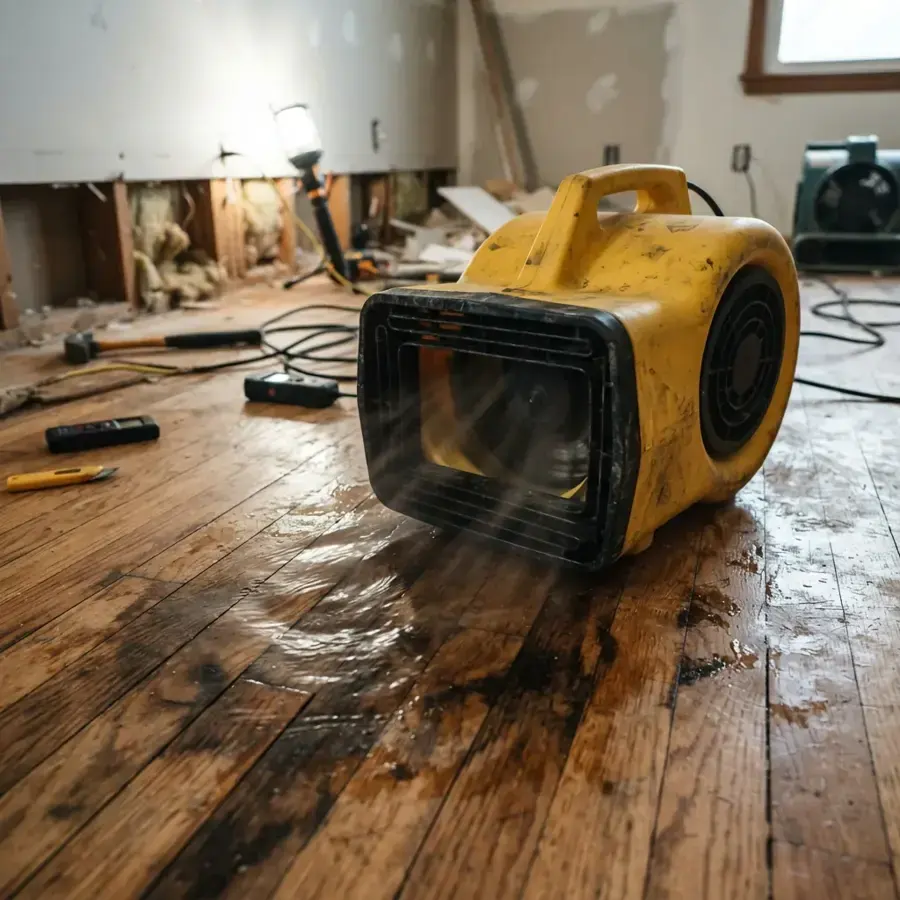
When Mountain Island Lake rose past its maximum during Tropical Storm Helene, the water did not stop at the shoreline. For Mount Holly homes and apartments it reached floors and walls, and the question after the water left was how to dry them.
Key takeaways
- During Helene, Mountain Island Lake passed its 100 foot maximum level on September 26, 2024 and peaked at 107.9 feet just before midnight on September 28.
- Mount Holly, Lucia and Riverbend Township took the brunt of Helene's damage in Gaston County.
- Many apartments at The 28 at Mount Holly flooded, which shows how water can affect multi unit buildings.
- Wet walls and floors are dried to measured readings, not to how they look or feel.
- Drying comes after extraction and removal of what cannot be saved, and rebuilding waits for the readings.
What Helene did to Mountain Island Lake
Mountain Island Lake covers about 3,281 acres and is fed by the Catawba River. It was created in 1924 with the Mountain Island hydroelectric station and is managed by Duke Energy.
In September 2024, Tropical Storm Helene pushed it past its 100 foot maximum level on September 26. It peaked at 107.9 feet just before midnight on September 28.
A Gaston County damage assessment after Helene counted 6 structures destroyed and 105 with major damage across the county. Those figures cover Gaston County as a whole, not Mount Holly alone.
Where the water went in Mount Holly
Mount Holly, Lucia and Riverbend Township took the brunt of Helene's damage in Gaston County. Many apartments at The 28 at Mount Holly flooded during the storm.
Water at that depth does not just sit on a floor. It rises into walls, flooring layers, cabinets and insulation, and it stays there after the lake drops.
Why dry to readings, not by feel
A wall can feel dry to the hand and still hold moisture inside. Drying that stops too early leaves wet framing behind new drywall.
A moisture meter shows what the eye cannot. The restoration team sets a dry standard from unaffected materials in the same home and dries until the wet areas match it.
- Readings are taken before drying starts to set a baseline.
- They are repeated at each visit to show progress.
- Drying ends only when the readings reach the goal.
The 2019 flood as a comparison
Helene was not the first time lake water reached homes here. In 2019, three days of heavy rain led Duke Energy to open the Lake Norman floodgates, and more than 100 homes along Mountain Island Lake flooded.
Water released from Cowan's Ford Dam at Lake Norman flows downstream into the much smaller Mountain Island Lake. That is why lakeside homes can see water rise even after the rain has stopped.
- Lake water rises more slowly than creek water, but it can stay high for days.
- Floors may be wet from below and walls from the bottom up.
- Items stored low in garages and ground floor rooms are the first to be lost.
Step by step after the water is out
Drying follows a sequence. Skipping a step usually costs more time later.
1. Extraction and removal
Standing water is pumped out, and flooring and drywall that soaked up lake or floodwater are removed. Water that carried lake sediment is treated as contaminated.
2. Mapping
Moisture meters and a thermal camera show how high the water wicked into walls and where it traveled under floors.
3. Drying
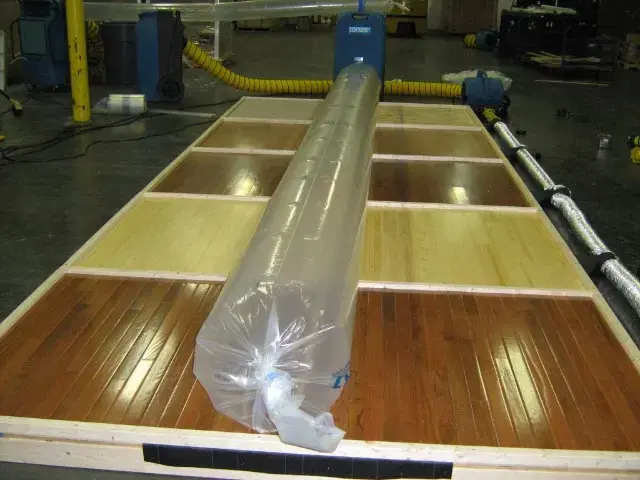
Air movers push dry air across wet surfaces, and dehumidifiers pull moisture from the air so the cycle continues.
- Air movers are placed to cover floors, wall bases and cavities.
- Dehumidifiers run in the closed space to keep humidity low.
- Wall cavities are opened or vented so air reaches the framing.
4. Checks
Readings are logged at each visit, and equipment is moved or removed as areas reach the goal.
Protecting belongings and records
A flooded home holds more than walls and floors. Furniture, clothing, documents and keepsakes all need a decision, and the first hours matter.
Move what is dry to a dry room, and keep a list of what was lost. A simple room by room inventory with photographs is the strongest support for a claim.
- Lift papers, photographs and electronics above the waterline right away.
- Set aside items with sentimental value so they are not thrown out in bulk.
- Label boxes by room so the inventory is easy to rebuild.
- Keep receipts for storage, hotel stays and emergency supplies.
Homes and apartments dry differently
A single family house and an apartment building need different plans. Mount Holly has 5,690 detached single family homes and 631 attached homes, plus apartment buildings with 307 units in buildings of 5 to 9 units.
In an apartment, water often moves between units, and the drying plan has to account for the shared walls and floors.
- Detached homes: separate drying zones for each level and room.
- Attached homes: the shared wall is checked on both sides.
- Apartments: ground floor units, stairwells and neighboring units are all mapped.
What to ask before drying starts
Before equipment is set up, a homeowner can ask for the plan in plain language. A clear plan avoids surprises when walls are opened.
- What dry standard is being used, and how was it set?
- Which rooms will have equipment, and for how long?
- What will be removed before drying starts?
- How will progress be shared and documented?
How long does it take?
There is no single answer. The time depends on the material, how long it was wet and how much water it absorbed. Wood framing and thick subfloors take longer than drywall.
The drying time estimator gives a general picture, and the restoration team confirms it with readings.
When to start rebuilding
Rebuilding waits for the readings. Closing a wall over wet framing leads to odors and hidden damage later, and mold needs only a damp cavity to take hold.
Structural drying is finished when every wet material meets its dry goal. A storm and flood cleanup hands off to the rebuild at that point, and the Mount Holly hub lists related services.