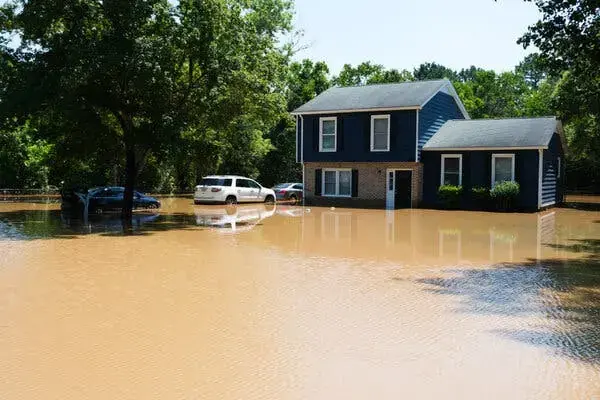
Creek flooding is fast. In June 2023, 4 to 5 inches of rain overflowed Irish Buffalo Creek in Kannapolis, and homes that had been dry that morning had water inside by the evening.
Key takeaways
- On June 20, 2023, Irish Buffalo Creek overflowed on the west side of Kannapolis and flooded Pine Street and Tiffany Drive.
- About 30 people were evacuated from mobile homes on Tiffany Drive and Pine Street, and 19 homes suffered major damage.
- Creek floodwater is contaminated Category 3 water, so it is handled with protective gear and many materials are discarded.
- Extraction comes first, followed by removal of wet materials, cleaning and drying to measured readings.
- Kannapolis has flooded before, including a flash flood on August 27, 2008.
What happened in June 2023
Over June 19 and 20, 2023, 4 to 5 inches of rain fell and Irish Buffalo Creek overflowed on the west side of Kannapolis. The creek flooded Pine Street and Tiffany Drive.
About 30 people were evacuated from mobile homes on Tiffany Drive and Pine Street, and 19 homes suffered major damage.
The Town and Country mobile home neighborhood on Tiffany Drive is in the 100 year floodplain and has mobile homes built before 1980.
Kannapolis has seen floods before
The 2023 flood was not the first. A pattern of heavy rain finding low ground has repeated across the city.
- August 27, 2008: a flash flood closed numerous streets, forced evacuations at a rest home on Pine Street and needed at least 14 swift water rescues. About 70 buildings in Cabarrus County were damaged by floodwater.
- June 28, 2013: Afton Run Creek flooded and closed Dogwood Boulevard on the southwest side of Kannapolis.
- December 30, 2015: up to 3 inches of rain in a few hours caused drainage flooding, including Oakwood Avenue.
Why creek water is different from a pipe leak
A burst pipe releases clean water. A creek carries mud, runoff, debris and whatever else the stream picked up on the way, which makes it Category 3 water under the IICRC categories.
That changes the work. Carpet, pad and drywall that soak up creek water are not dried in place, and anything the water touched is cleaned and treated.
What contamination means in practice
The restoration team wears protective gear and sets up containment so the mess stays in the affected rooms.
- Porous materials such as carpet, pad and insulation are removed.
- Hard surfaces are cleaned and treated with antimicrobial products.
- Wet drywall is cut out and the cavity is dried and cleaned.
The first day after the water arrives
Safety comes before cleanup. Floodwater can hide hazards, and the house may not be safe to enter until the power is off.
- Stay out of the house until the water has receded and local officials say it is safe.
- Turn off power at the main breaker if it can be reached without stepping in water.
- Do not use fans, electronics or the heating and cooling system in wet rooms.
- Photograph the water level on walls and the damage to furniture and floors.
- Move valuables and documents to dry areas above the waterline.
- Contact the insurance company and a restoration team as soon as possible.
Extraction before drying
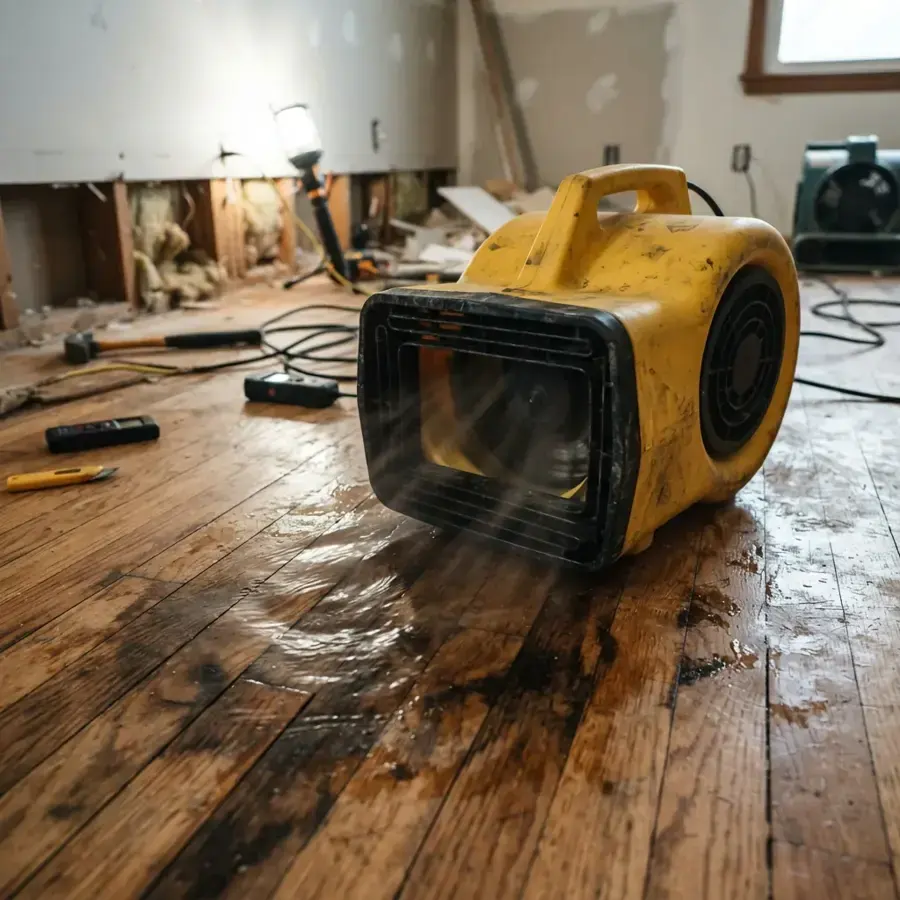
Drying equipment cannot do its job while water is still standing on the floor. The first step is removal.
A crew providing water extraction uses pumps and extractors to pull standing water and mud from floors, then checks the walls and subfloor with moisture meters.
Flash floods in 2008 and 2023 left standing water in homes and streets, and extraction is the first step before any drying.
- Pumps move large volumes of water out of the house.
- Extractors lift water from carpet, pad and hard floors.
- Silt and debris are shoveled and bagged.
- Meters map which walls and floors need drying.
Dealing with mud, silt and debris
Creek floods leave a layer of mud behind. It is heavy, slippery and carries whatever the water picked up along the way.
Bare feet and bare hands are a poor idea. Gloves, boots and a mask are the minimum, and a crew in full protective gear is the better answer for a whole house.
- Shovel and bag silt rather than washing it down a drain.
- Wash and treat hard surfaces before anything is brought back inside.
- Keep children and pets out of the house until cleanup is complete.
- Save a sample photograph of the high water mark on the walls for the claim.
Cleanup and drying that follow
Once the water is out, the work moves to cleaning and drying. A storm and creek flood cleanup sorts the house into what can be cleaned and what has to go.
Structural drying follows, with air movers and dehumidifiers running until the framing and subfloor reach their normal readings. That is the point where rebuilding can safely start.
What to save and what to discard
Not everything touched by creek water is lost, but the rules are strict about what stays.
- Discard: carpet, pad, mattresses, upholstered furniture and wet drywall.
- Clean and keep: solid wood, metal, glass and hard plastic that can be washed and treated.
- Case by case: electronics, appliances and documents, which need a professional opinion.
Mobile homes and older buildings
The Town and Country mobile home neighborhood on Tiffany Drive is in the 100 year floodplain and has mobile homes built before 1980. Floodwater can enter low floors, belly insulation and wall panels quickly in this kind of structure.
Kannapolis also has a large share of older housing, with about 29.7 percent of units built before 1960. Older floors and walls can hold water longer, so the readings matter.
- Mobile homes: floors, insulation and subfloor panels need close inspection.
- Older houses: plaster, lath and thicker framing dry more slowly.
- Newer houses: drywall and insulation are the usual items to remove.
Living with a creek nearby
Kannapolis sits on several water features, including Irish Buffalo Creek, Second Creek, Afton Run Creek and Kannapolis Lake. Heavy rain that raises one of them can reach the nearest low yard within hours.
Keep a short plan in a visible place: where the main breaker is, where documents are kept and which room is highest in the house. The Kannapolis hub lists the other water damage services in town.