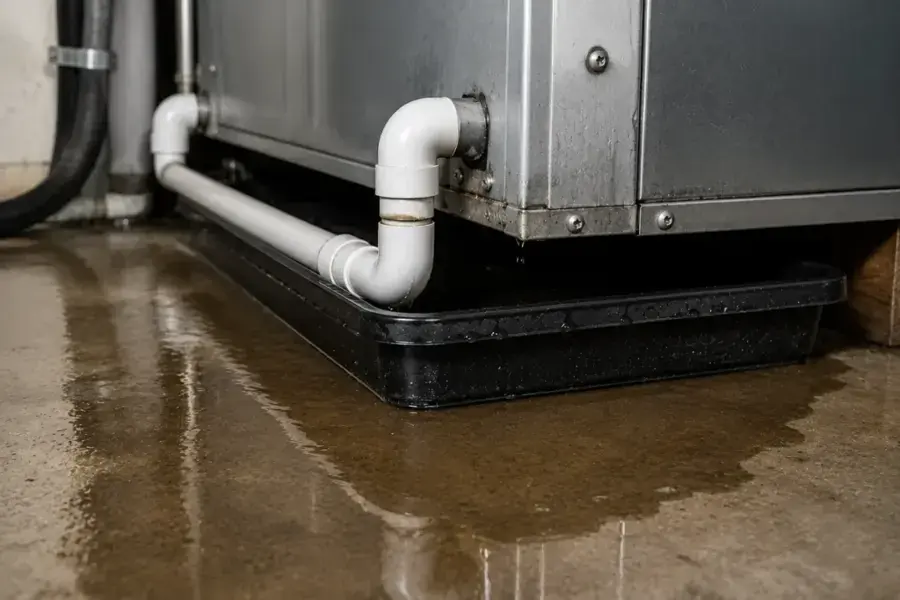
Huntersville summers are humid, and an air conditioner removes a lot of that humidity as water. When the path that carries the water away stops working, the overflow lands in the attic, and the ceiling is next.
Key takeaways
- Attic air handlers in Huntersville homes make a lot of condensate in humid summers, and the pan and drain must carry it all away.
- A new brown or yellow ceiling stain on a hot, muggy day can point to the air conditioner, not the roof.
- Switch off the air conditioner at the thermostat and the breaker before the pan overflows again.
- Wet insulation and drywall under an attic unit need to be opened and dried, not painted over.
- A stain that returns after a repair usually means the water is still getting into the ceiling cavity.
Why attic air handlers leak in humid weather
An air conditioner cools air by pulling heat and moisture out of it. The moisture collects on a cold coil and drips into a pan, then leaves the house through a drain pipe.
In a humid subtropical climate, that is a lot of water on a hot day. Many Huntersville homes built in the 1990s through the 2010s carry their air handlers in the attic, so the pan sits directly above a ceiling.
- The drain pipe can clog with algae, dust and sludge, because the water is warm and damp all summer.
- The pan can crack or rust through on an older unit.
- A float switch that was meant to shut the system down can fail or be set wrong.
- A secondary pan under the unit fills and spills when the primary drain is blocked.
How to tell condensate from a roof leak
A stain on the ceiling does not say where the water came from. The weather at the time is the best clue.
A roof leak shows up during or soon after rain. A condensate leak tracks with the air conditioner running and with humid, hot days, and it can happen when the sky is clear.
Signs that point to the air conditioner
The ceiling stain sits near the hallway, closet or room that holds the attic access, or directly under the unit.
- The leak appears on dry, muggy days.
- Water is clear or slightly cloudy rather than rusty brown.
- The stain grows while the system runs and stops when it is off.
Signs that point to the roof
A roof leak follows the storm, not the thermostat. The stain tends to sit near an exterior wall, a vent or a chimney.
- Stains appear within hours of heavy rain.
- Water shows up at the roof deck, flashing or a plumbing vent.
- The damage stops in dry weather even when the air conditioner runs.
What to do when the ceiling stains or drips
Acting early limits the damage. A pan that is still overflowing can soak the insulation and the drywall in a single afternoon.
- Turn the air conditioner off at the thermostat and at the breaker so no more water forms.
- Place a bucket under any drip and move furniture and electronics out of the room.
- Do not poke a sagging ceiling with your hand or a tool unless a bucket is directly below it. A bulging ceiling can hold a lot of water.
- Keep the attic closed and stay out of it if the floor is wet near wiring.
- Photograph the stain, the air handler and the pan before anything is changed.
What the restoration team does under an attic unit
The restoration team starts by finding how far the water traveled. Water in an attic moves along framing and insulation and can reach rooms far from the original stain.
A ceiling leak water damage job usually begins with moisture readings across the ceiling, the walls below and the insulation above.
- Extraction: standing water in the pan, platform or insulation is removed.
- Insulation: soaked batts or blown material are taken out because they hold water against the drywall.
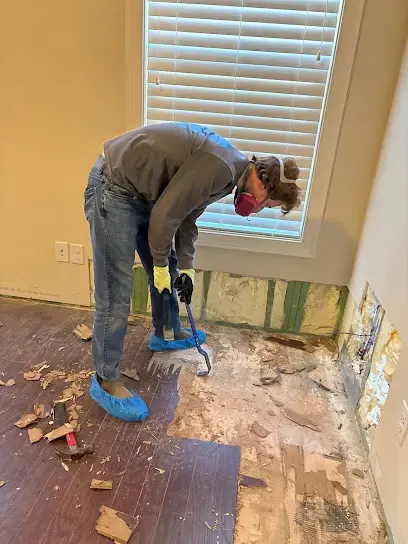
- Drywall: a ceiling that has sagged, stained through or gone soft is cut open so the cavity can dry.
- Containment: the work area is sealed off so dust and wet debris stay out of the living space.
What the insurance company will ask
Insurers tend to separate a sudden failure from long term neglect. A pan that overflowed after a clogged drain is usually described differently from a unit that leaked for months.
Give a simple timeline: when the stain appeared, what was switched off and when the repair was made.
- Photographs of the stain, the pan and the drain outlet.
- The technician's report on the cause.
- The restoration team's moisture readings and drying log.
- Any earlier service records for the air conditioner.
Why the ceiling cavity has to be dried
A stain is only the part of the damage that reached the surface. The joists, the back of the drywall and the insulation can stay wet for a long time behind it.
Painting over a stain locks that moisture in. In a humid climate, a damp cavity is the setting where mold can develop, so the aim is to dry it to normal readings.
The structural drying process uses air movers and dehumidifiers, with readings taken at each visit until the framing is back in its normal range.
Stopping the next overflow
Restoration removes the water that already got out. The overflow only stays fixed when the cause is corrected, and that is a job for an air conditioning technician.
The restoration team can point out what it found at the pan and drain so the technician knows where to look.
- Drain pipe: have it cleared and tested so water leaves freely.
- Float switch: a working shutoff switch stops the system before the secondary pan fills.
- Pan condition: a cracked or rusted pan needs replacing, not patching.
- Routine checks: look at the drain outlet and the attic platform at the start of each cooling season.
When the stain comes back
A ceiling that is repainted and stains again within a season usually still has a moisture source above it. Either the leak was not fully fixed or the cavity was never dried.
Check the stain against the weather again, and use the drying time estimator to set realistic expectations before the next round of repairs.