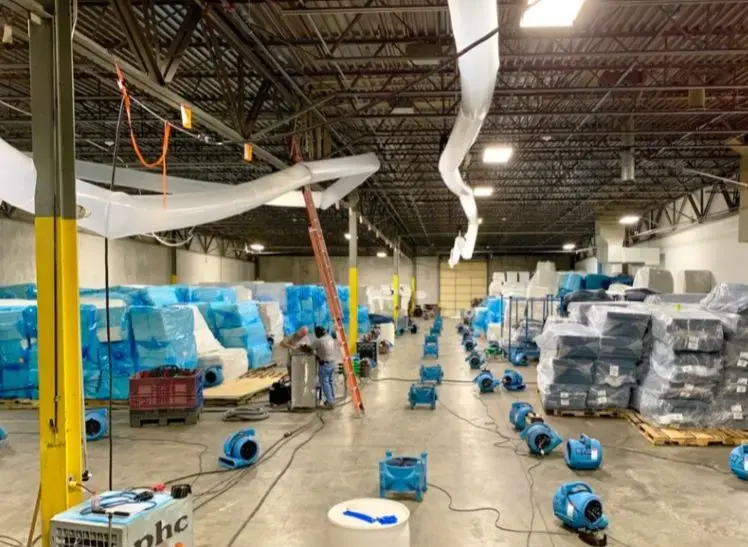
A business in downtown Davidson cannot simply close the door for a week and wait for the floor to dry. Water damage in a shop or restaurant costs sales for every day it sits, so the plan has to start the moment the water is found. Owners along Main Street, in the Cotton Mill and at Davidson Commons each face the same clock, even though the buildings are very different.
Key takeaways
- Downtown Davidson has one and two story brick commercial buildings along Main Street, now mostly restaurants and specialty shops.
- Flooding closed NC 115 (Main Street) at the Davidson and Cornelius town limits in February 2026, and a storm on July 10, 2026 shut a stretch of Main Street.
- The first day is about stopping the water, protecting stock and records, and calling the building owner and insurer.
- Brick, old floors and shared walls dry more slowly than they look, so readings decide when the job is done.
- Owners of buildings such as the Davidson Cotton Mill and Davidson Commons have their own coordination steps.
The buildings that make up downtown Davidson
Downtown Davidson is built around Main Street, with one and two story brick commercial buildings that are now mostly restaurants and specialty shops. The historic core received National Register Historic District status in 2009.
Beyond Main Street, the Davidson Cotton Mill on Delburg Street is a historic mill renovated into shops, offices and restaurants. Davidson Commons at Exit 30 is a grocery anchored shopping center on a 16 acre former industrial site.
- Main Street brick storefronts: shared walls and older materials.
- Davidson Cotton Mill: a large renovated mill with mixed tenants.
- Davidson Commons: grocery anchored retail with many connected spaces.
When the water comes from the street
Heavy rain can close roads in town. In February 2026, flooding closed NC 115, which is Main Street, at the Davidson and Cornelius town limits, and it reopened on Monday, February 16, 2026.
On July 10, 2026, a large tree fell on utility wires during storms and shut down a stretch of Main Street. Events like these remind owners that storms affect doors, roofs and basements as well as traffic.
A building that is not flooded can still take in water through a roof, a door threshold or a damaged utility connection.
The first day for a business owner
Speed matters, but so does order. A clear sequence keeps the damage from spreading and keeps the insurance claim on track.
- Stop the source: close the water valve for a pipe or appliance leak, or note where storm water is entering.
- Make it safe: turn off power to wet areas and keep staff and customers out of standing water.
- Protect stock and records: lift inventory, paper files and electronics off the floor and into dry rooms.
- Photograph and video the damage before anything is moved.
- Notify the building owner, property manager and insurance company as soon as possible.
- Call the restoration team and ask for a walkthrough of the affected spaces.
Why old brick and shared walls dry slowly
Brick, mortar and plaster hold water and release it slowly. A wall that feels dry to the touch can still carry moisture deep inside.
Shared walls between storefronts mean water can move next door, and your neighbor's leak can become your loss.
Floors and subfloors
Hardwood and wood subfloors cup or buckle when they take on moisture. Fast extraction and steady drying give the best chance of saving them.
Walls and ceilings
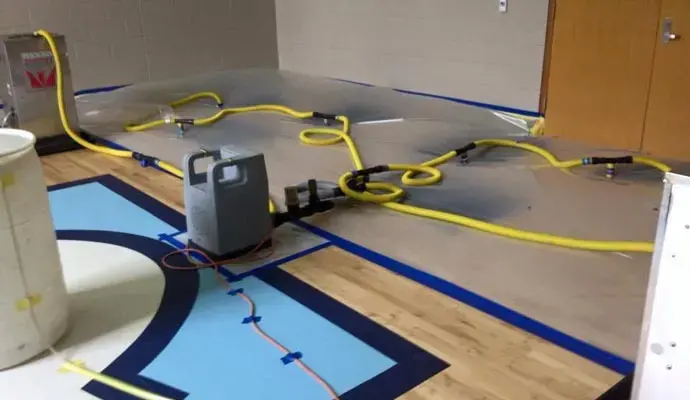
Drywall, plaster and insulation that stay wet are opened up so air can reach the cavity. Brick walls are dried in place with controlled airflow and dehumidification.
Keeping records for the insurance claim
A commercial claim is built on paper. The adjuster will want to see what was damaged, when it happened and what it cost to stop the loss.
Start a simple log on day one and add to it every time something changes.
- Time and date the water was found, and who found it.
- A list of every item moved, discarded or damaged, with photographs.
- Copies of moisture readings and equipment logs from the restoration team.
- Receipts for emergency purchases such as plastic sheeting or temporary storage.
- Notes on lost sales and days closed, kept alongside the invoices.
How the restoration team works in an occupied business
A commercial water damage job is planned around the business. The team maps the wet area, sets up containment and works in phases so part of the space can stay open when it is safe.
After a street or storm flood, storm and flood cleanup treats the water as contaminated and removes it before drying starts.
- Extraction: standing water is pumped and vacuumed out.
- Moisture mapping: meters show how far the water went.
- Drying: air movers and dehumidifiers run until readings meet the goal.
- Documentation: logs and photographs for the insurance adjuster.
Protecting the building while the business recovers
Open walls and running equipment can make a shop feel unfinished, but they are signs that the drying is working. Customers and staff understand a short disruption better than a lingering odor or a failed ceiling.
Ask the restoration team for a plain schedule of what happens each day, and share it with staff so everyone knows which areas are off limits and why.
- Keep foot traffic away from wet floors and equipment cords.
- Post a notice at the door if part of the space is closed.
- Check air movers and dehumidifiers are running when you open each morning.
- Report any new stain, smell or drip to the team promptly.
Restaurants, shops and offices have different priorities
Each business type has its own concerns, and a good plan reflects them.
- Restaurants: kitchens, floor drains and walk in coolers need to be cleared before food service resumes.
- Shops: stock, shelving and display fixtures should move out of the wet area first.
- Offices: servers, paper records and electronics need protecting immediately.
Working with landlords and neighbors
Many Davidson tenants share a building. Water that starts in one unit can reach another.
Tell the landlord as soon as possible, check the lease for who handles what, and ask the restoration team to document how far the water traveled. The commercial water damage page covers the general process, and the Davidson hub lists the other water services in town.
Getting back to business
A water loss ends when the structure is dry, not when the floor looks clean. Structural drying is finished when the readings show the materials are back to normal.
Keep every report, photograph and invoice. They support the claim for repairs and lost business.